




| Membership | Price (+HST) |
|---|---|
| Single | $85/year |
| Single Plus | $120/year |
| Family | $130/year |
| Family Plus | $175/year |
| Contributing | $300/year |
| Supporting | $600/year |
| Sustaining | $1,000/year |
| Benefactor's Circle | $2,500/year |
| Director's Circle | $5,000/year |
| President's Circle | $10,000/year |

Bald Eagles at RBG
Bald Eagle Conservation Project
In 2013, RBG was home to the first eaglets to hatch on the Canadian shoreline of Lake Ontario in over 50 years.
Royal Botanical Gardens has the perfect environment to convince Bald Eagles to settle in. These large predators need at least 100 hectares of undisturbed forest to nest and roost, plus an adjacent 50 hectares of wetlands to allow them to catch fish. We have it all right here, and on March 22 and 23, 2013, the first eaglets to hatch on the Canadian shoreline of Lake Ontario in over 50 years, broke free of their eggs: a testament to the environmental restoration work that has taken place at RBG and Hamilton Harbour.


Spring 2026 Update
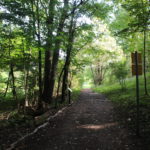
The long-standing pair of eagles continue to nest at Cootes Paradise Marsh, observed as sitting on nest as of the last week of February. This year’s nest is easily viewable from the nature trail system via the Arboretum entrance for the north side of Cootes Paradise. The nest is a reuse of one of their former nests, located at the top of the tallest pine tree about 300m west in full view from the boardwalk.
Please remain on the trail system and don’t forget to bring your binoculars. Young eagles are expected to appear in early April. The walk to the boardwalk is about 1.5km from the Arboretum parking and over hilly terrain. The nest is located in the most important habitat protection area of the property.
Video by Garrine Tsang.
History of Bald Eagles at RBG
It has been decades since Bald Eagles nested on the Canadian shores of Lake Ontario. In fact, by the early 1980s, mostly as a result of widespread use of the pesticide DDT, there were only four active nests in all of the Great Lakes. That equals approximately 15 surviving birds. The species was all but locally extinct.
Nowadays, with the effects of DDT behind us — it was phased out beginning in the early 1970s — and with serious conservation efforts, the Bald Eagle has made a comeback. There are now dozens of active nests on the Great Lakes and inland through Southern Ontario, and countless nests in lakes north of 49th parallel.
Bald Eagles have overwintered in Cootes Paradise at Royal Botanical Gardens in increasing numbers annually. In 2008 the first pair stayed for the entire summer — which lead our conservation staff to believe that the time was right for a pair to settle in and call Cootes their own. This means building a nest, laying eggs, raising young. They have become a highly visible and inspirational symbol of why choosing sustainability and restoring the environment for generations to come is possible.
What do Bald Eagles need?
- A large body of water, usually a marsh larger than 30 hectares, to supply them with fish, birds and other small mammals to eat.
- A relatively large patch of undisturbed mature forest (large trees) in which to nest within 0.5 km of the hunting area and at least 0.5 km from people.
- A large patch of woodland in which to rest and shelter during the non-nesting season; experts suggest a minimum of 260 hectares of woodland.
What is RBG doing?
- Continuing with our wetland restoration program, Project Paradise, to ensure suitable hunting grounds exist in this 250-hectare marsh.
- Striking a better balance between visitor access and wild spaces. This means modifying our trail network (Hopkins Loop and Grey Doe Trails) to ensure that adequate undisturbed forest exists while ensuring visitors the opportunity to experience wildlife in adjacent areas. We have also clearly posted a 15-hectare Special Protection Area around the nest site.
- Erected the beginnings of a Bald Eagle nest in very large White Pine tree in an isolated area on the north shore of Cootes Paradise. Though the eagles investigated other potential nest trees, in the end they have settled on this White Pine.
Support the Eaglets
Resources
Learn more about RBG’s conservation efforts with these downloadable PDF resources and external links.
- Eagle Photography (pdf)
- History of Bald Eagles at RBG (pdf)
