





| Membership | Price (+HST) |
|---|---|
| Single | $85/year |
| Single Plus | $120/year |
| Family | $130/year |
| Family Plus | $175/year |
| Contributing | $300/year |
| Supporting | $600/year |
| Sustaining | $1,000/year |
| Benefactor's Circle | $2,500/year |
| Director's Circle | $5,000/year |
| President's Circle | $10,000/year |

Remembering Carmen: Why Turtle Road Safety Matters
July 2, 2026
By Sarah Richer, Senior Ecologist, Species at Risk Program; Tys Theijsmeijer, Senior Director of Ecosystem Stewardship Programs and Policy; and Dr. David Galbraith, Director of Science
Few wild animals capture people’s hearts quite like turtles. June is one of the best times to see them up close, but that is also when turtles face some of their greatest risks. From late May through mid-July, female turtles leave their wetland homes to travel into surrounding uplands to lay their eggs. In our increasingly road-dominated landscape, this journey is perilous. When these innocuous and endearing ancient reptiles encounter and attempt crossing linear features like roads and railways, most do not survive.
With two large marsh systems under our stewardship, turtle conservation within the property is a top priority for the Royal Botanical Gardens. Over the years, large numbers of turtles have been killed on roads adjacent to these wetlands. Among our most beloved species are Blanding’s turtles, a charming species that can reach up to 27 cm (~10 in) long. Their sunshine-yellow throat and naturally upturned mouth give their face a perpetual gentle smile. Sadly, their numbers are decreasing; they are at risk across their range in North America and are nationally endangered in Canada. This June the impact was again felt locally with the recent loss of one of our local Blanding’s Turtles, named Carmen.
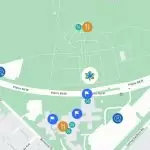
For the turtles of Grindstone Marsh and Hendrie Valley, life unfolds within a few hundred metres of Plains Road West and Spring Gardens Road in Burlington. Spring Gardens Road area is hidden away, meeting Valley Inn Trail into Hamilton, becomes causeways crossing the marsh estuary. RBG’s long-term conservation goals for turtles include installing continuous wildlife roadkill mitigation barriers in partnership with Burlington along the Hendrie Valley Nature Sanctuary road corridor to prevent small wildlife like turtles from reaching the road, and ideally guiding them to safer crossings such as underneath the Plains Road West bridge over Grindstone Creek. This large bridge over the valley contributes to the creation of an Eco-corridor. The barriers that guide wildlife to these safe crossing spots dramatically reduce road mortality for the multiple species that attempt to cross.

Photo: Plains Rd Fencing and Carmen the Blanding’s Turtle, J. Leader (RBG Volunteer) 2023.
To date, RBG in collaboration with City of Burlington has installed 1200 m of Animex barrier fence that winds around various features in intermittent sections, protecting a total 930 m of the 2.4 km long section of Plains Road West adjacent to Hendrie Valley and the Grindstone Creek marshes’. While this is significant progress it remains incomplete with multiple unprotected gaps: the most notable gap is a 230 m stretch along the road’s north side from 571 Plains Road West to the east edge of the West Plains United Church’s parking lot. It would require up to 400 m of fence to skirt around private property; however, steep slopes and crumbly soil along parts of this section present an engineering challenge that will require funding, and collaboration between various landowners and the City of Burlington, as well as possible changes to some landowners’ site use. Another current gap is at the ~15 m wide entrance to RBG’s Cherry Hill Gate parking lot, the site where RBG visitors park and access Hendrie Valley. In addition, various gaps leading turtles from safety into urban danger and unfenced backyards along the side street of Patricia Drive’s residential landowners’ bordering Hendrie Valley.
This year’s turtle nesting season brought a particularly sad moment in our ongoing efforts to protect Hendrie Valley’s remaining Blanding’s turtles; a bitter lesson in how crucial effective wildlife roadkill mitigation barriers are for preserving both biodiversity and endangered species. On Thursday June 11, 2026, one of our six radio-tagged adult breeding-age female Blanding’s turtles, affectionately known as Carmen, was struck and killed on Plains Road West by the West Plains United Church (one of those above-noted gaps).
Carmen’s remains were discovered by chance thanks to Miss Donnell Gasbarrini, an acquaintance that RBG’s Sarah Richer met in 2019 when Donnell worked with turtles at the Toronto Zoo. Remarkably, this wasn’t the first time Donnell crossed paths with Carmen; back in 2020, when Carmen’s radio transmitter battery was dying and the pandemic limited availability of replacements, it was Donnell who graciously stepped in, generously loaning a spare tag and monitoring equipment from her program to ensure RBG could continue protecting both Carmen and her nests. One of Carmen’s head-started hatchlings from that year’s clutch was christened ‘Donnell’ as part of Sarah’s gratitude for those vital contributions. Miraculously, of all the people travelling the city’s roads at that time, Donnell happened to be returning from visiting family in Burlington not long after Carmen was killed. Since the vehicle strike destroyed Carmen’s radio tag, if not for Donnell we never would have known what happened to Carmen. She fortunately had the skills to recognize the species, safely move Carmen’s remains off the road before they were damaged beyond recognition, and retrieve the only three still-intact eggs before calling Sarah to break the heart-wrenching news. She also had the compassion to stay a while, as Sarah grieved and cradled in her lap what was left of who had become a cherished family member after following and protecting her for the past decade.
Carmen was first spotted in Hendrie Valley on June 12, 2011 by long-time RBG volunteer Catherine Shimmell. She was first tagged in 2012; and aside from various brief interruptions when her tag accidentally detached, had been monitored since. Tracking her movements helped us document and understand her seasonal behavior patterns and habitat preferences, reduce risks to her safety during her nesting season forays, and ensure her nests’ success. For 14 years, the efforts of diligent, driven, and devoted staff and volunteers helped keep her safe.
Carmen was named in 2012 by past RBG staff member David D’Entremont, in honour of the intelligent and stylish world-travelling fictional main character from “Where in the World Is Carmen Sandiego”, an edutainment franchise that helped teach children geography starting in 1985. Carmen sported some fun asymmetry in her carapace scutes; her frontmost dorsal scute extended to the back ends of both her second left and third right marginal scutes, and her right frontmost lateral scute was around a third the size of its left-side counterpart. Her eyes were bright, her claws suitably sharp, her tail tiny and adorable, her plastron markings unpretentious, the lines on her plastral scutes quite faded but still visible if you squinted, and her legs stronger than you’d give credit to for anything her size. She handled the regular intervals we would bother her to refresh her radio tag with suitable turtle-y aplomb (meaning, if she could speak English, I imagine she’d roll her eyes saying “UGH, you guys *again*? FINE. Just hurry up and get it over with, I’ve got important things to do – the males on that log are looking my way”.
Blanding’s turtle Carmen shared Hendrie’s marshes with fellow tagged adult females; Emily, Lola, Callie, and Miika. To the best of our limited understanding of preliminary results from in-progress genetic analysis being conducted thanks to Professor Jianping (JP) Xu’s McMaster lab, Carmen’s genetic background indicates she was likely only distantly related or unrelated to Seneca, the only known female Blanding’s in Cootes Paradise. JP’s findings also show (with some margin of error) that she was possibly a first-degree relative to not-yet-reproductive youngster Jenny (9 shared alleles across 8 (of 8) loci), and is also related to fellow adult Lola (sharing 9 alleles across 7 (of 8) loci), young gentleman Squirt (8 alleles shared across 7 (of 8) loci), and fellow adult Emily (8 alleles shared across 6 (of 8) loci).
A 42-year long study by researchers at the University of Michigan found that the older a turtle is, the more important she is in keeping the stability of her species’ population. Turtles that attain a higher age and reproduce successfully carry their genes forward, giving their offspring a greater chance to reach old age and more frequently produce high quality eggs; and the reproduction of older turtles can increase both the quality and life span of ensuing generations. Blanding’s turtles aged 20-30 years old will lay 0.35 clutches per year, or roughly one out of every three years; females older than 55 tend to breed 0.57 clutches per year, or roughly one out of every two years. Carmen was an impressive and celebrated contributor to RBG’s efforts to increase Blanding’s turtle recruitment. She was gravid (carrying eggs) in nine of the past 12 years, indicating that she was at a minimum over 55 years old. Out of the 74 eggs we recorded her laying (not including the three retrieved this year; the odds they are successful are stacked against them), she produced 44 offspring; 25 of which were sent for a two-year headstarting program at Scales Nature Park in Orillia prior to their release.
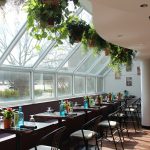
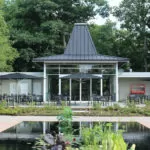
Carmen’s nesting habits were usually relatively predictable. She would wander between the marshy ponds of Hendrie Valley, wait perhaps a day or two, and then launch up for a two-to-five-day staging period in Hendrie Park’s Kippax Pond before eventually choosing her nesting site after wandering across multiple sections in the park. Each of her nests were reliably laid somewhere in Hendrie Park. Beside the teahouse in 2017; near the Rose Garden’s west gazebo in 2019, 2024, and 2025; the Global Garden in 2020 and 2022; Veggie Village in 2023. It wasn’t until 2026 that she unexpectedly broke that rhythm.
Losing Carmen is a stark reminder that every meter of our wildlife barrier network matters, and every gap has the power to undo decades of conservation efforts. Though significant progress has been made, even small, unprotected sections of road have devastating consequences for an already rare and declining species like Blanding’s turtles, which already face numerous challenges throughout their still-unknown lifespan.
Each turtle represents decades of nature’s investment in survival, and each loss snuffs out future generations of offspring that will never hatch. Losing one-sixth of the area’s breeding females is a monumental loss the remaining population can ill-afford, and a setback for the recovery of a species already struggling against both local and range-wide declines. Extinction is rarely caused by a single event, but rather a series of local extirpations compiling together until a tipping point is reached. Building on and completing wildlife barrier networks and remaining gaps are an important step toward stopping turtles from meeting such a preventable fate. Carmen’s story highlights both the successes achieved through conservation, and the work still ahead of us. With funding, permission, collaboration, support, and the devotion from ardent fans of our innocent bystander turtles, we can ensure that future generations of Blanding’s turtles continue roaming our region.
Some of Sarah Richer’s favourite memories of Carmen:
- The night in 2023 Carmen discovered the newly-installed Animex along the south edge of Hendrie Park – the wildlife roadkill mitigation barrier. She had been nesting progressively closer to Plains Road West as each year passed, and I was relieved that it was up and intact in time for this season. That year, she decided to, rather pointedly, walk straight up to the barrier, very clearly raise her head and scan its spread left to right, and rather than her familiar unhurried meandering wander, she went on what one could interpret as – forgive the anthropomorphizing – an indignant march in a very purposeful straight line along the entirety of its length until the fence ended above the southwest side of Oak Allee. She walked more purposefully and slowly once she passed it, and we cautiously watched over her as she spiraled towards what became her chosen nesting site on the park’s east side – where at that time the fencing hadn’t yet been installed.
- Also in 2023, hiding behind a giant tree in Veggie Village at 2:00 AM with volunteer Summer Thomas, as we both tried budgeting the amount of noise made shooing away the gang of raccoons circling Carmen, without risking her getting spooked by our efforts.
- Her 2021 clutch; having dropped her transmitter in 2020, we didn’t know if she was gravid – but we confirmed she laid when Blanding’s hatchlings appeared around Oak Allee, being drip-fed into visibility over the course of nearly three weeks in 2021. Wonderful coworkers headed up to Algonquin gave them lifts to the headstarting facility so they could stay safe. RBG Gardener Eric Abram’s eagle eyes found, out of the entire park, the one-inch wide nest emergence hole – directly across from the doors leading into the Hendrie Park access Tunnel; arguably the spot in the park that sees the most foot traffic. Some of her hatchlings ended up falling into the Allee’s catch basins; fortunately, my 2021 intern Brittany Killingbeck was more svelte than I, so she could fit into the catch basins and safely retrieve them.
- Her nesting night in 2020 – she laid 10 eggs over the course of an evening; dedicated volunteer Catherine Shimmell kept watch over her the entire time while I watched over another nesting Blanding’s across the valley. After the season progressed, I was dismayed I had to admit to Catherine that for unknown reasons, no embryos developed. Still, Catherine’s efforts weren’t wasted – while she nested, Catherine heroically shooed both a coyote – and a skunk – away from Carmen throughout the nesting process. Guarding them during that time is a crucial role, given that when turtles are in the act of laying eggs they are completely helpless and no more able to stop what they’re doing than a human woman giving birth. We regularly find turtles here that are injured or killed from having limbs chewed off by anything with a snout and a predilection for easy protein; we can’t risk our few remaining ladies losing their ability to dig their nests.
- My 2022 summer student Serina Tourangeau preventing Carmen from being hit by abruptly jumping in between Carmen and some RBG staffers driving a vehicle patrolling during a late-night event at the Hendrie tent; thank goodness Serina was willing to put in the extra hours to keep Carmen safe.
- Carmen’s steadfast patience; unlike her peer Callie (a Blanding’s turtle who seems unafraid of loud trains), Carmen preferred quieter surroundings. In 2024, she waited until well after 10:30 pm to leave Kippax Pond to begin her nesting work (setting her own personal record in the process) only AFTER my summer student and a volunteer (who reportedly didn’t stop chatting once) called it a night. I cast a wide invite for volunteers to search the area when they were due to hatch; no luck, except one visitor who later helped a Blanding’s hatchling cross South Bridle Trail towards the marsh.
- Her progeny – I looked forward to each moment. Dropping them off and picking them up from Scales Nature Park, PIT tagging, notching, and releasing them to their marsh homes. Then, as what felt like a tiny measure of my enormous gratitude, inviting those who had assisted me with our turtle conservation efforts to name one prior to their release. Maybe we run into any of them in future: Almond, Aster, Canoe, Donnell, Grace, Indigo, Kelly, Mica, Moriarty, Ori, and Wendell. They, and Carmen’s 15 other offspring undergoing their two-year headstarting, have a world of work ahead of them.
Sorrowfully, this year Carmen’s life came to an infuriatingly preventable end – on a road. Carmen, my gentle sweet Sun-throat; no apology can express the despair, anger, frustration, and multi-pronged resentment at all the factors that lead to you being snuffed out from your already-precarious wetland community. More could have, and should have, been done to help you live safely. Unlike us, you never did a single thing wrong in your entire life.

Photo: Blanding’s Turtle Carmen Spring 2026, courtesy of Katja Kubasta

Photo: Blanding’s Turtle Carmen, courtesy of Sarah Richer
More from the RBG Blog
Check out RBG’s blog for announcements, articles, and more from Canada’s largest botanical garden.
Want to be sure you hear first? Sign up for our weekly e-newsletter to hear about upcoming events, weekend activities, articles, and more!
