



| Membership | Price (+HST) |
|---|---|
| Single | $85/year |
| Single Plus | $120/year |
| Family | $130/year |
| Family Plus | $175/year |
| Contributing | $300/year |
| Supporting | $600/year |
| Sustaining | $1,000/year |
| Benefactor's Circle | $2,500/year |
| Director's Circle | $5,000/year |
| President's Circle | $10,000/year |


When a Garden Tree Goes Wild: The Story of Amur Cork Tree
November 5, 2026
By Tys Theijsmeijer, Senior Director of Ecosystem Stewardship Programs and Policy
A flash of bright yellow leaves in late October might catch your eye in the forest, but at Royal Botanical Gardens (RBG), it can signal an unexpected conservation challenge. The Amur Cork Tree (Phellodendron amurense), once a valued member of RBG’s botanical collections, has begun spreading into nearby natural areas, where it is now being actively managed as an invasive species.
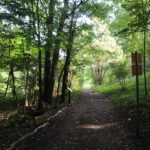
Native to northern China, Amur Cork Tree was introduced to RBG’s Arboretum and Hendrie Park during the 1950s. For decades, these trees remained part of the cultivated landscape. In recent years, however, hundreds of young trees have appeared in surrounding forests, demonstrating how plants introduced for botanical interest can sometimes escape into natural habitats. Situations such as this are why Botanical Gardens are identified as among the introduction points of invasive species in Canada’s National Invasive Species Strategy.
How can you recognize it?
Amur Cork Tree resembles several native trees, including Black Walnut and ash species, with its compound leaves and furrowed bark. Its brilliant yellow autumn foliage provides one of the best opportunities to spot it. Mature trees produce clusters of plump, black fruits containing seeds that can establish new generations in nearby forests.


- Compound leaf of an Amur Cork Tree; 2. Amur Cork Tree in RBG Arboretum Avenue 1; 3. Amur Cork Tree plant tag
Why is Amur Cork Tree difficult to manage?
Managing this species presents a surprising complication. Although seed production requires pollination between male and female flowers, Amur Cork Tree can change its reproductive form. Simply retaining male trees while removing female trees is therefore not a reliable long-term solution.
In 2025, RBG staff removed 639 trees from the forest including a number of larger individuals, supported in part by an Ontario Invasive Species Centre grant. Management continued in 2026, with several dozen small trees and hundreds of seedlings removed.
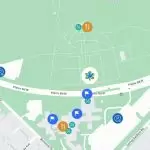
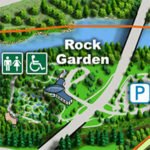
Several mature specimens were also removed from the Arboretum and former nursery area in 2025 leaving two large specimens planted in the Arboretum in 1955, located in Tree Avenue #1. Large Specimens are also still present at the Rock Garden and RBG Centre.
What does Amur Cork Tree mean for RBG’s forests?
The growing presence of Amur Cork Tree raises important questions about how warming local conditions may favour plants that previously remained contained within cultivated collections. The species is already recognized as invasive in parts of the United States.
At RBG, protecting biodiversity means not only conserving remarkable plant collections, but also monitoring their effects on surrounding forests. Sometimes, responsible gardening means knowing when a beautiful tree no longer belongs.
More from the RBG Blog
Check out RBG’s blog for announcements, articles, and more from Canada’s largest botanical garden.
Want to be sure you hear first? Sign up for our weekly e-newsletter to hear about upcoming events, weekend activities, articles, and more!
